Gallery
No video available.
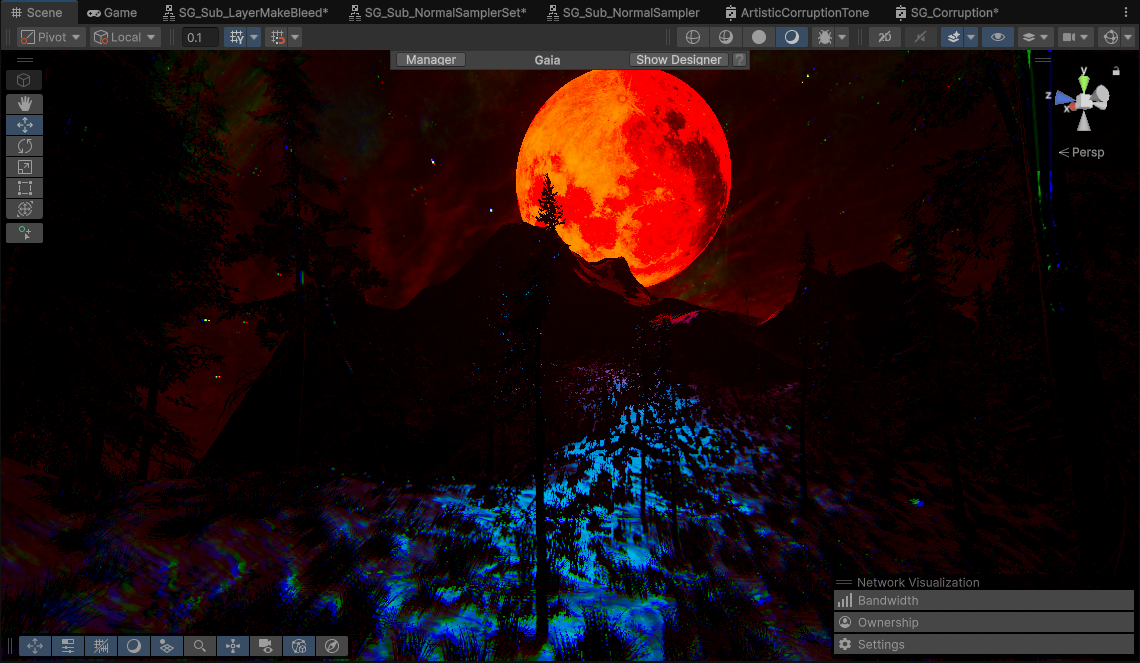
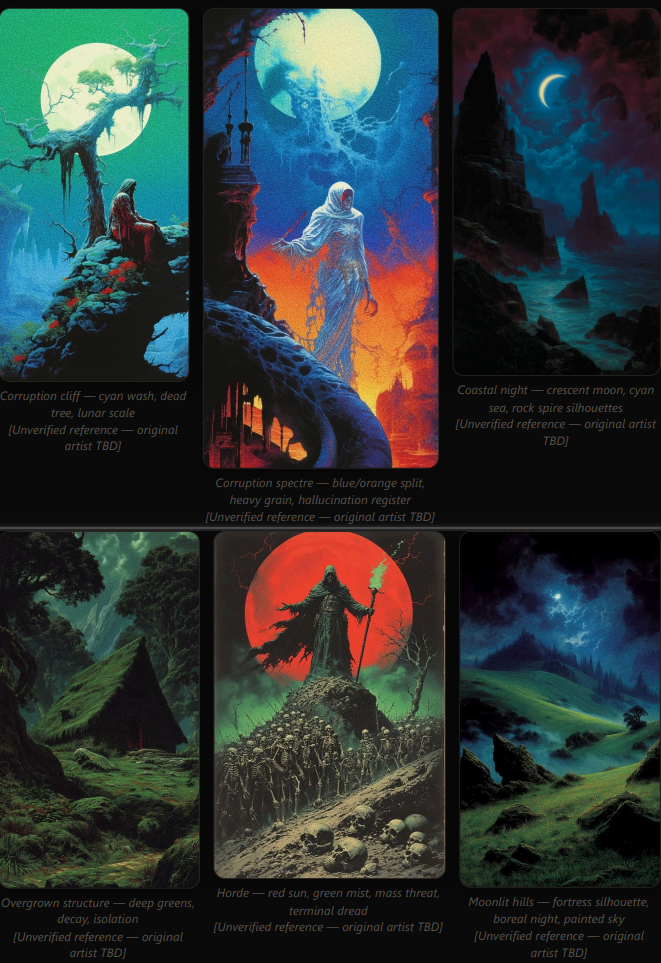
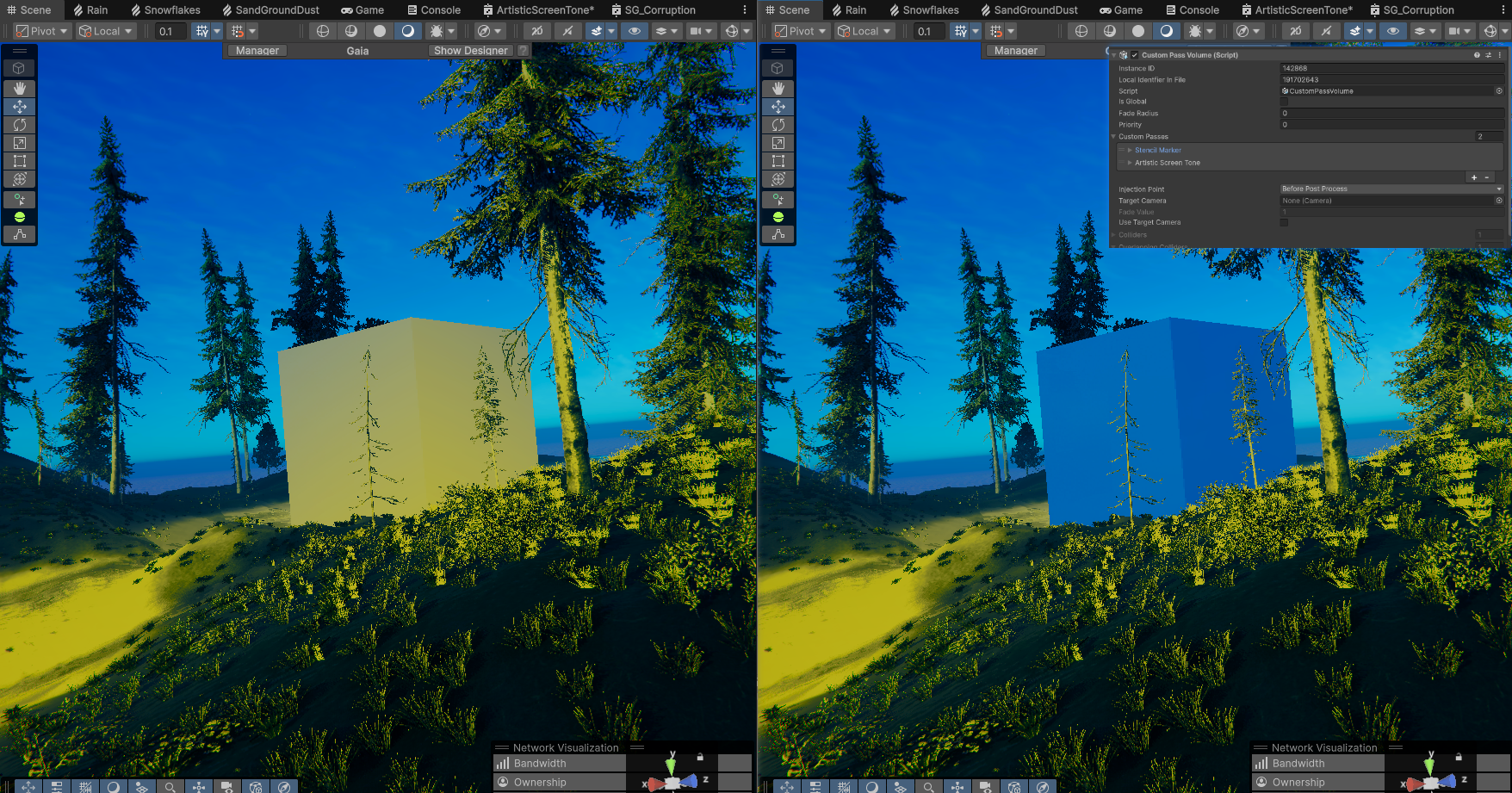
Engineered a custom NPR post-processing pipeline to bridge the gap between PBR physics and stylized art direction. Features include dynamic hue remapping, non-destructive saturation gating, and stencil-based gameplay safeguards.
In implementing highly stylized Non-Photorealistic Rendering (NPR), the core challenge for a Technical Artist is deconstructing abstract artistic desires into controllable mathematical logic while making pragmatic technical trade-offs under extreme deadline pressure. This post-mortem reviews the R&D process for the “Medieval High-Contrast” lighting prototype and documents how I utilized a custom post-processing pipeline to deliberately break physical laws.
In the Spriggan Art Bible, the core visual pillars are defined as: Unreal, Ethereal, Melancholy, and Somber. The design specification emphasizes a world built on “Stark Contrasts”—where natural environments maintain a muted, oppressive tone, while magical or corrupted forces must erupt with “bursts of vibrant, unnatural hues.”
The Conflict: Ideal Architecture vs. Business Velocity While rewriting the underlying Custom Lighting Model is the most “architecturally sound” solution, the commercial reality was unforgiving: We needed to deliver a high-fidelity Vertical Slice for investors within 3-4 months to secure the next round of funding. Altering the massive HDRP lighting architecture posed high risks and a long development cycle. Therefore, I adopted a “Brute-force yet impactful” strategy—utilizing a Custom Pass Volume to build a black-box filter. This low-invasiveness approach allowed us to extract maximum visual impact on a very short runway.
By deconstructing reference art from titles like Blasphemous and Marathon, I identified that the core of their high-contrast atmosphere lies in subjective, intentional “Color and Value Dislocation.” In these works, light behavior often defies physical common sense:
Limitations of Native Engines: Standard PBR systems are strictly energy-conserving and physics-based, making them incapable of native subjective mapping. While a global LUT can establish an environment’s “muted” tone, it acts as a flat filter and cannot handle dynamic, spatial highlight conversions for specific light sources. Only by introducing non-physical calculations in screen space can we achieve that “sharp, intentional intensity.”
To address artistic pain points within a tight window, I developed a custom shader pipeline that grants the Art team direct control over non-physical behaviors:
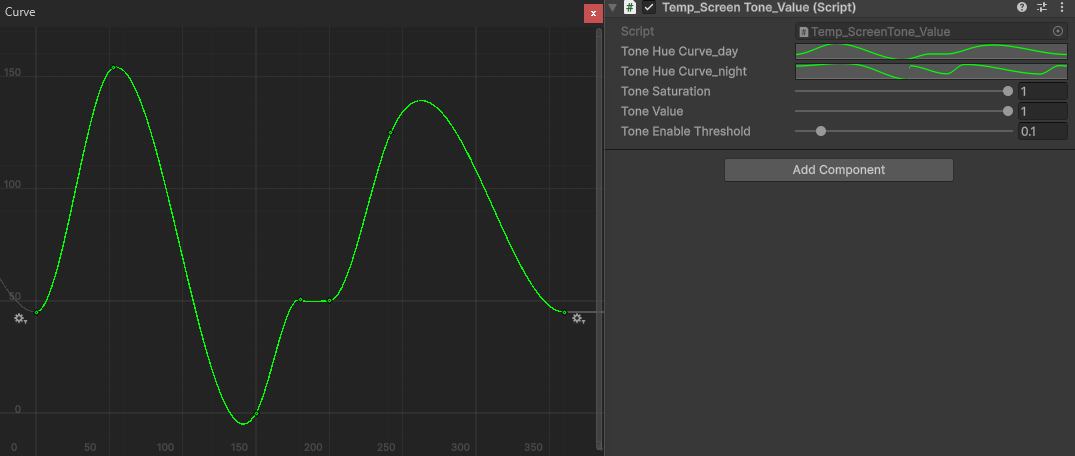
I broke the linear continuity of color calculations, introducing a dynamic Hue remapping logic based on Day/Night environment curves.
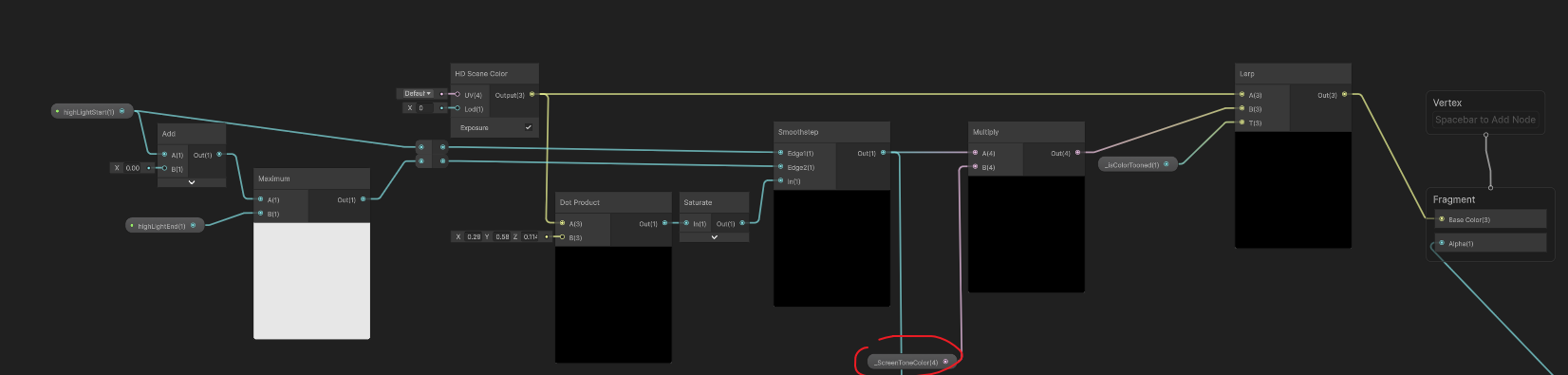
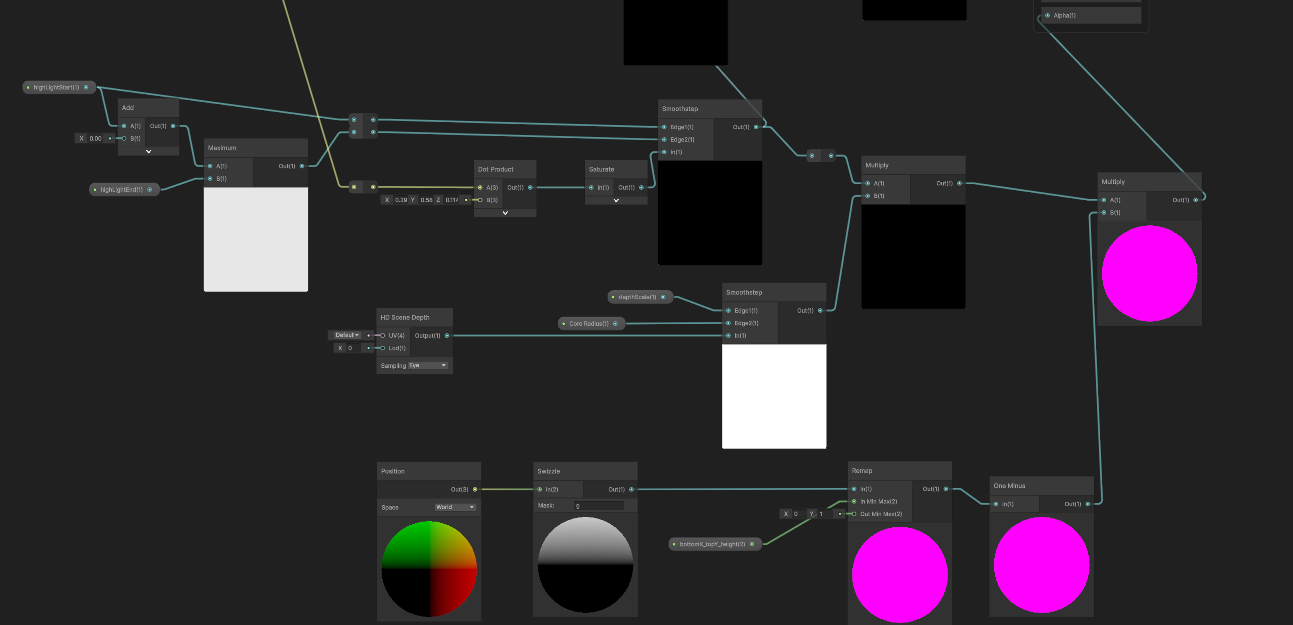
0.1. This means standard, low-saturation PBR sunlight (Muted tones) bypasses the system entirely, while intentional, high-saturation magical lights trigger the stylized “burst.”To prevent the high-contrast filter from overwhelming the visual hierarchy, I utilized multiple masking layers:
Smoothstep to lock the color shift strictly to the lighting impact zones, effectively shielding base albedo textures from color contamination.
Visual expression must not sacrifice the player experience. At the end of the Custom Pass, I integrated Stencil Override logic.
By utilizing the stencil buffer, I completely excluded all enemy units from the stylized filter. No matter how chaotic or unnatural the environment lighting becomes, enemy silhouettes and highlights retain 100% physical contrast and recognizability, ensuring combat readability in a hardcore gameplay setting.
No video available.